13
World · Locations

Locations

The places the brand lives in. Mention a location in a content prompt and its reference image anchors the scene.

02

The places

La Bibliothèque (The Back Room)
Secondary refuge

La Bibliothèque (The Back Room)

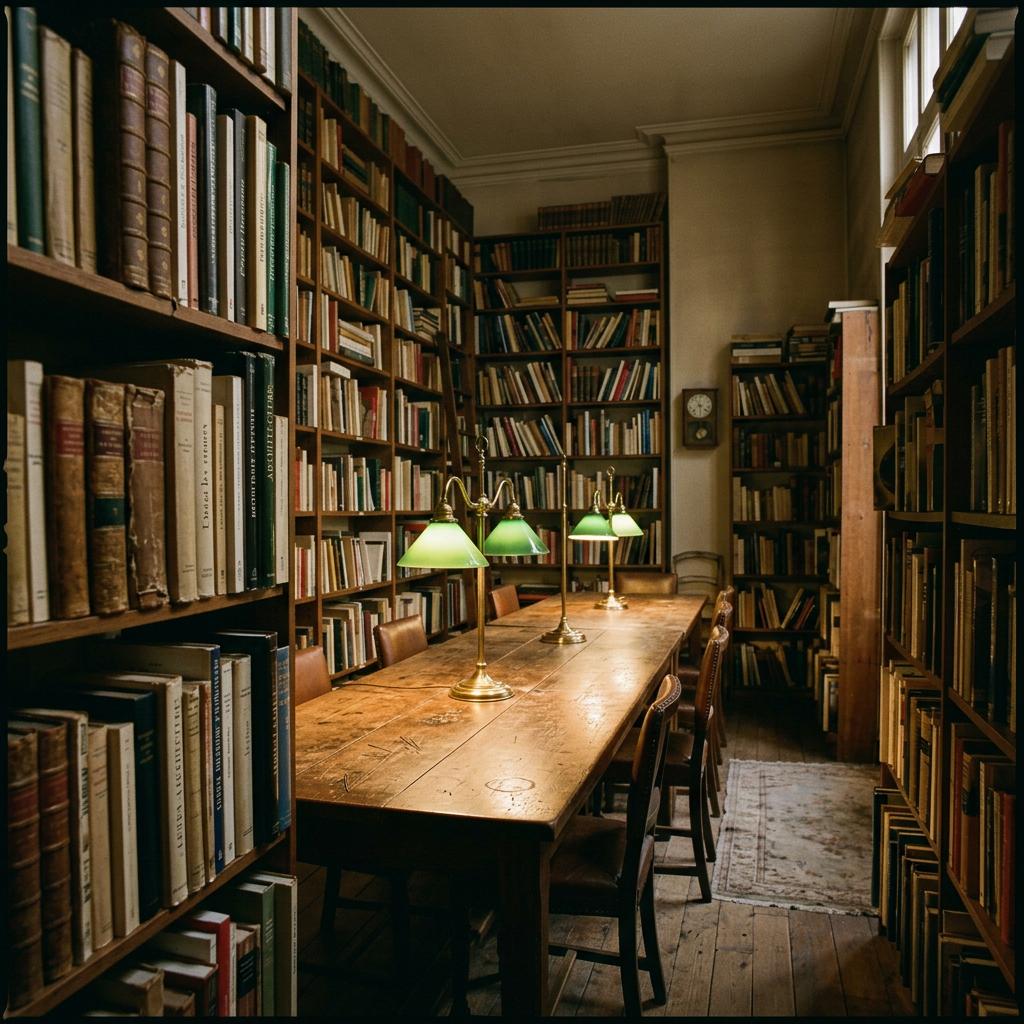
A narrow, high-ceilinged room behind the espresso bar where floor-to-ceiling shelves hold a semi-curated jumble of French literature, art monographs with cracked spines, architecture texts, cookbooks bloated from kitchen use, and orphaned volumes left by patrons over decades. Three brass reading lamps with green glass shades cast pools of warm light onto a long refectory table scarred with pen marks and coffee rings. The air smells of paper dust, lemon oil, and the ghost of yesterday's cigarettes (from before the ban). This is where translators spread dictionaries, where book groups argue over wine on Thursday evenings.

···
The Cobblestone View
Atmospheric backdrop

The Cobblestone View

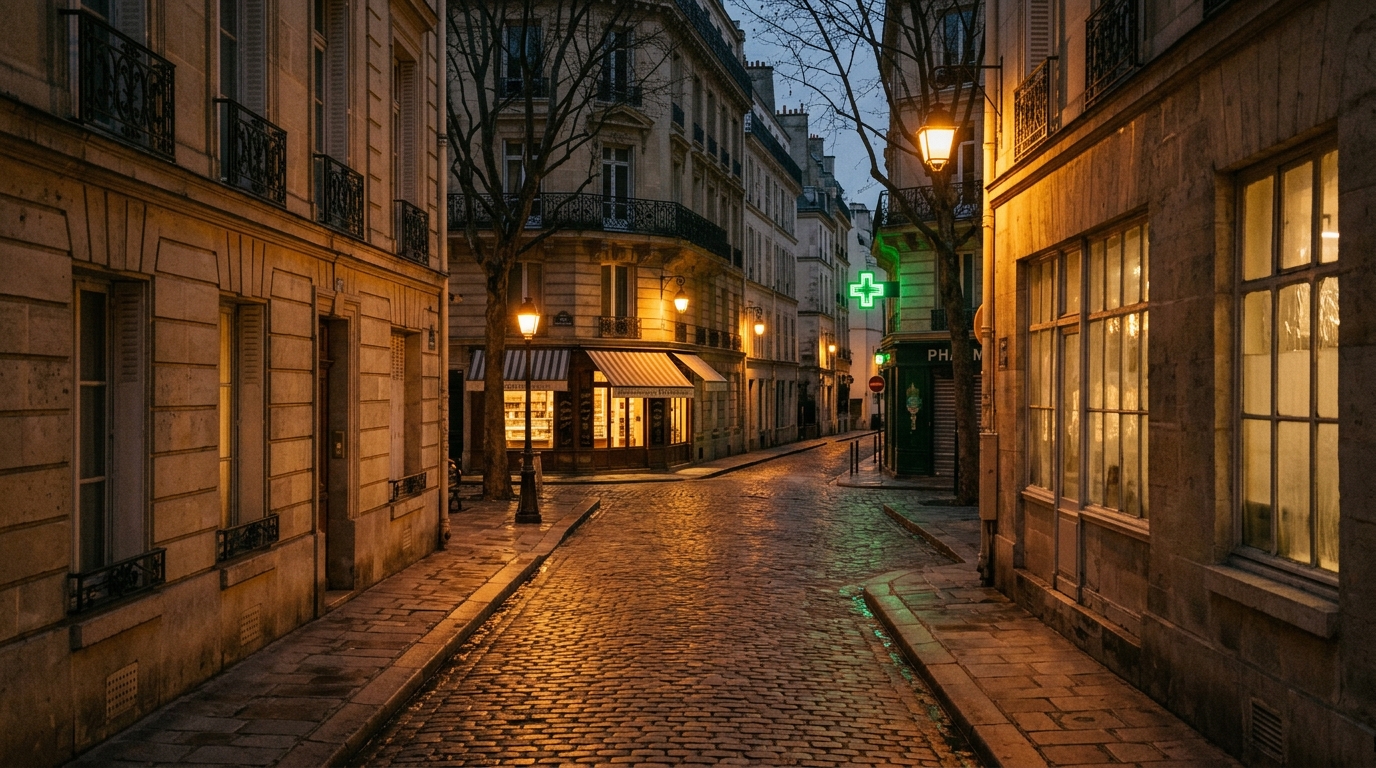
What unfolds beyond the tall windows: Rue de la Chouette, a narrow side street of honey-colored limestone buildings with wrought-iron balconies, uneven cobblestones that catch rain in their valleys, a bakery's striped awning two doors down, the green pharmacy cross blinking at the corner. In morning, delivery vans double-park while drivers argue cheerfully. In evening, streetlamps ignite one by one, turning the cobblestones amber. Bare plane tree branches tap the windows in wind. This external world—visible but separated by wavy antique glass—frames the interior sanctuary and reminds patrons they are in Paris, in a specific arrondissement, on a particular corner where light and stone and chance converge.

···
The Corner Window Bay
Hero location

The Corner Window Bay

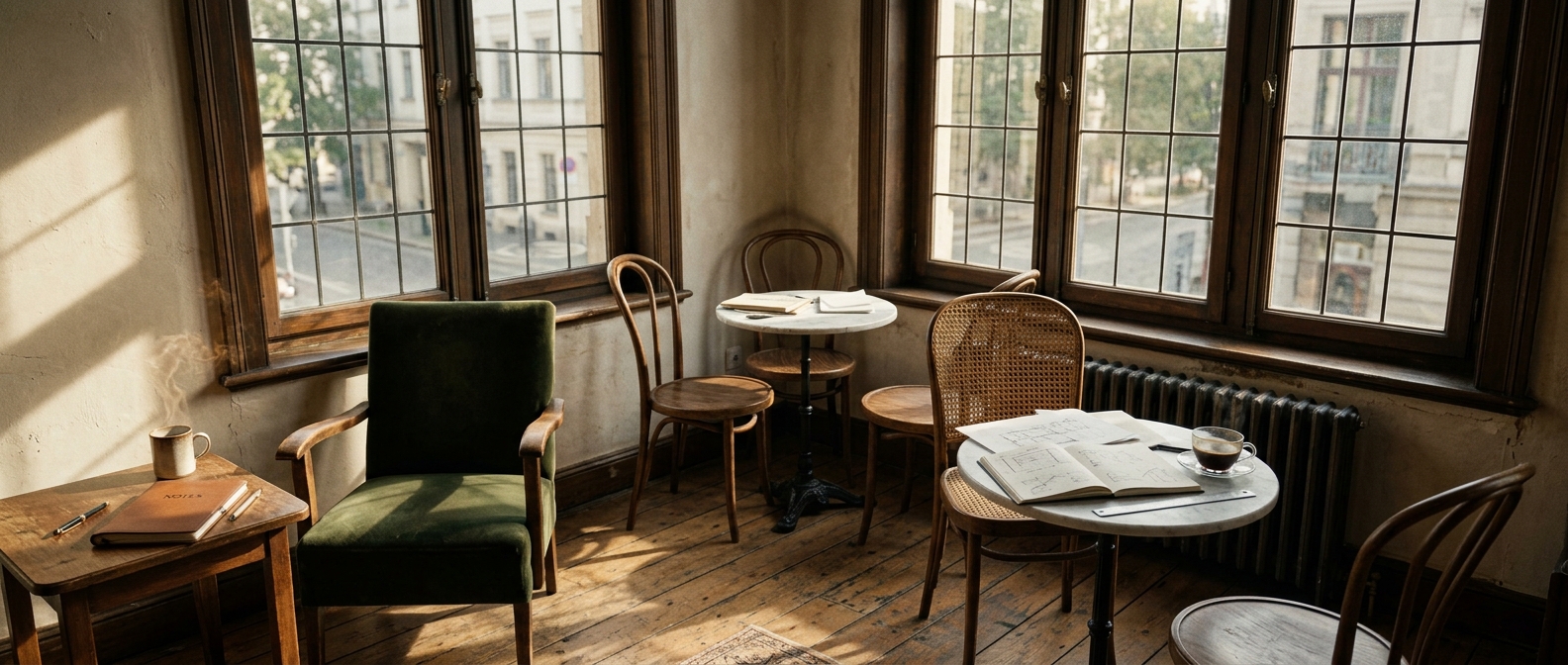
Southeast corner of the building where two tall casement windows meet at ninety degrees, flooding a cluster of mismatched chairs—cane-backed bistro seats, a velvet armchair with exposed wooden arms, two bentwood café chairs—in morning and afternoon light. The light carves geometric shadows across worn oak floorboards, catches dust motes above open notebooks, and turns coffee steam into amber ribbons. This is where the novelist sits at 7am, where the architecture student claims an entire marble-topped guéridon by mid-morning, where strangers share the small round table by the radiator on winter afternoons.

···
The Jazz Corner (Evening Transformation)
Temporal alternate state

The Jazz Corner (Evening Transformation)

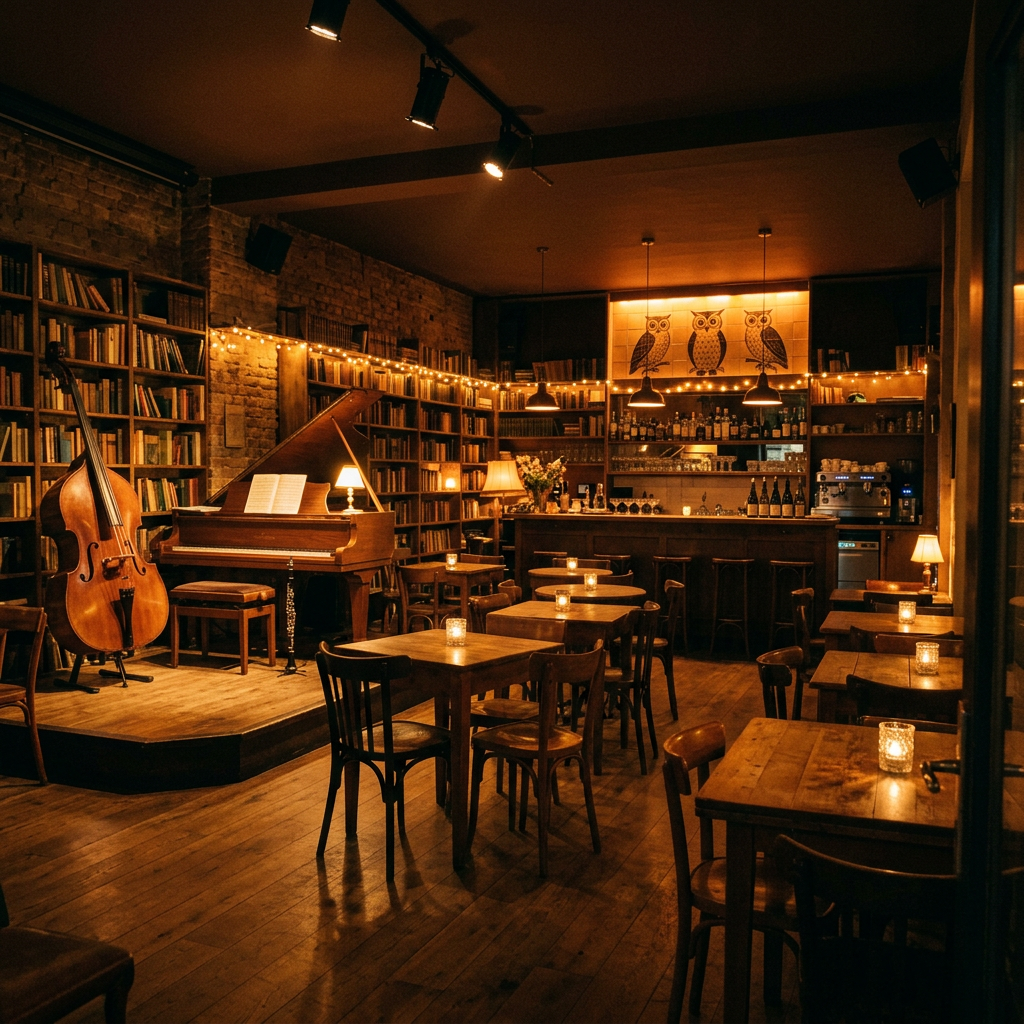
After 8pm, the café contracts and deepens: overhead lights dim, the reading lamps glow warmer, a small platform in the northwest corner (usually stacked with returned books) becomes a stage for a double bass, a piano, sometimes a clarinet. Candles in mismatched holders appear on tables. The espresso machine quiets; wine bottles and vintage coupes emerge. The same physical space—same scarred tables, same mismatched chairs—becomes a different country: intimate, amber-lit, filled with the conversation of upright bass and brushed snare. Regulars who arrived at dawn for coffee return for Sancerre and standards. The owl motif tiles above the bar seem to watch differently in this light.

···
Le Comptoir (The Counter)
Heart of operations

Le Comptoir (The Counter)

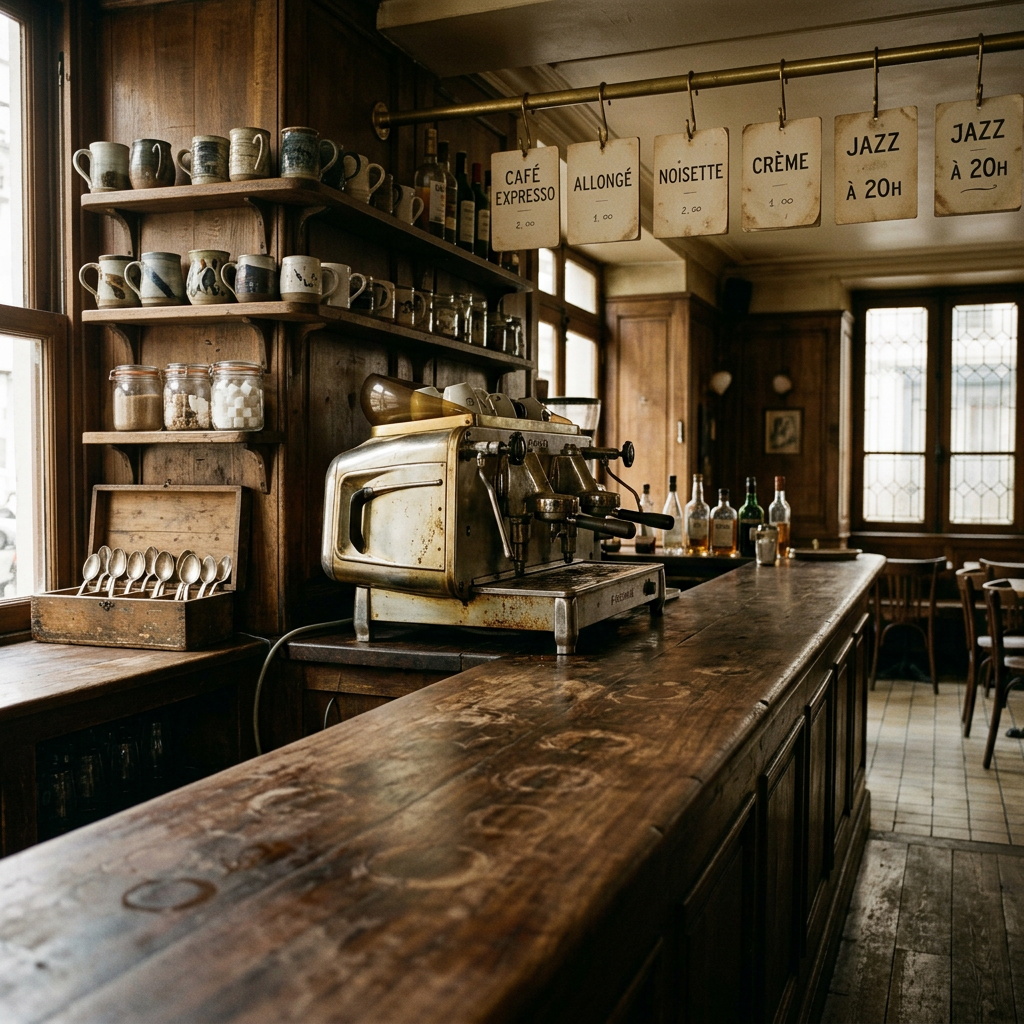
A twenty-foot expanse of walnut counter, its surface worn concave in places by a century of elbows and cleaning rags, bearing the circular ghosts of ten thousand saucers. Behind it: a vintage Faema E61 espresso machine in brass and chrome, its grouphead permanently stained, its drip tray scarred by decades of portafilter knocks. Shelves behind hold hand-thrown ceramic mugs (no two alike), glass jars of sugar cubes, a wooden box of vintage silver spoons. Above, a brass rail suspends handwritten menu cards on butcher's hooks. This is the spine of Maison Hibou—where orders are taken, where regulars are recognized by their usual, where the barista becomes bartender when jazz begins at 8pm.

···