A Parisian patisserie reimagined as a jewellery atelier — each cake is a precious object, the counter is a vitrine, and being seen holding the box matters as much as the taste.
- Decadent without being baroque — richness expressed through restraint and geometry, not ornament and flourish
- French without being quaint — Parisian as a power move, not as nostalgia or provincial charm
- Luxurious without being comfortable — you come here to be seen and to acquire, not to linger or relax
- Feminine without being soft — the 'Madame' and 'Mademoiselle' evoke women as collectors and connoisseurs, not as delicate or sweet
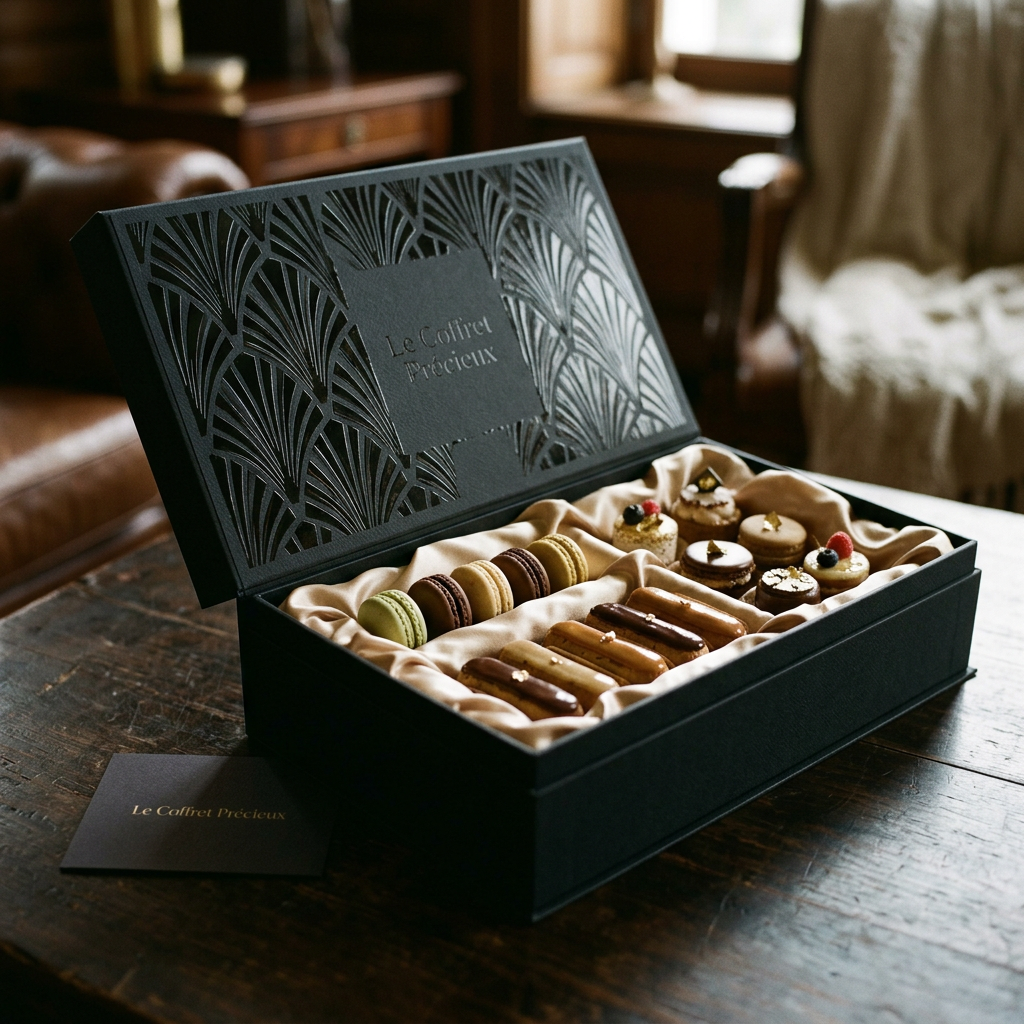
“You recognise it by the black box held like a jewel case, the refusal of warmth, and the geometric precision that says 'this is not for everyone.'”
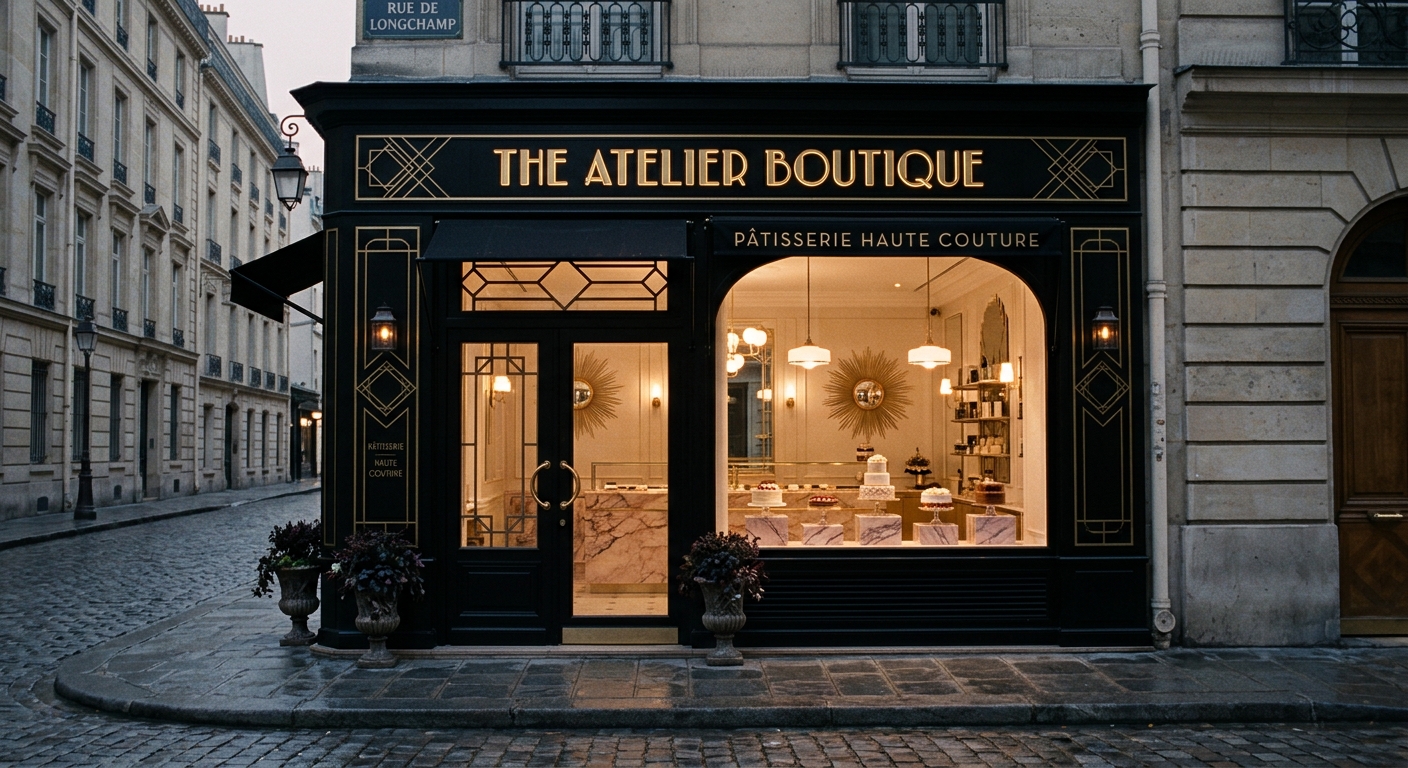
Madame Mademoiselle treats pastry as haute joaillerie — each cake is a singular objet displayed under theatrical spotlight against black lacquer and polished marble. The voice speaks in clipped Vogue captions, present-tense imperatives that command rather than invite, with untranslated French marking exclusivity. Schnyder M cuts sharp headlines like faceted crystal; champagne-toned backgrounds recede behind noir and oxblood accents; brass hardware catches cold light. This is not a bakery where you linger — it is a gallery where you acquire, where the box you carry out performs your taste before you ever open it. Art Deco geometry governs every surface: the champagne coupe's faceted stem, the vitrine's grid isolating each confection, the 45-degree angle of piped buttercream. The brand refuses warmth entirely, positioning scarcity and severity as the luxury itself. You come here to be seen wanting what cannot be casually had.
- Champagne coupe faceted glass catching single spotlight, vertical stem casting geometric shadow
- Black lacquer vitrine surface reflecting brass hardware and cake geometry
- Polished Calacatta marble slab with sharp grey veining, cold to touch
- Gold leaf suspended in mirror-finish glaze, untouched and clinical
- Brass compact case from 1925, patina buffed to cold shine


The voice is clipped, declarative, and unapologetically luxurious — each sentence lands like a line in a Vogue caption, precise and visually evocative, never chatty or warm. It speaks in present-tense absolutes and sensory imperatives, borrowing the register of haute couture editorials: nouns treated as objects of desire, verbs that command rather than invite, French words deployed untranslated as markers of exclusivity.
- +Use present tense, declarative mood
- +Deploy untranslated French nouns confidently
- +Lead with materials: lacquer, gold, velvet
- +Write in sentence fragments when dramatic
- +Name the object, not the feeling
- +Use second person sparingly, imperatively
- –Never use exclamation marks or emojis
- –Avoid 'we believe' or brand manifestos
- –No warmth cues: 'welcome', 'cozy', 'family'
- –Don't explain or justify the price
- –Never start with 'In today's…'
- –Avoid question headlines entirely
Logos, palette, fonts, voice, positioning, audience.
“You recognise it by the black box held like a jewel case, the refusal of warmth, and the geometric precision that says 'this is not for everyone.'”
What this brand really is
A Parisian patisserie reimagined as a jewellery atelier — each cake is a precious object, the counter is a vitrine, and being seen holding the box matters as much as the taste.
Lover because this brand trades in decadence, sensory pleasure, and the performance of taste — the cakes are intimate luxuries, not everyday fuel. Ruler because it establishes status through exclusivity and curation — you don't stumble in, you arrive. Together they create aspiration without warmth, which is exactly the Art Deco posture.
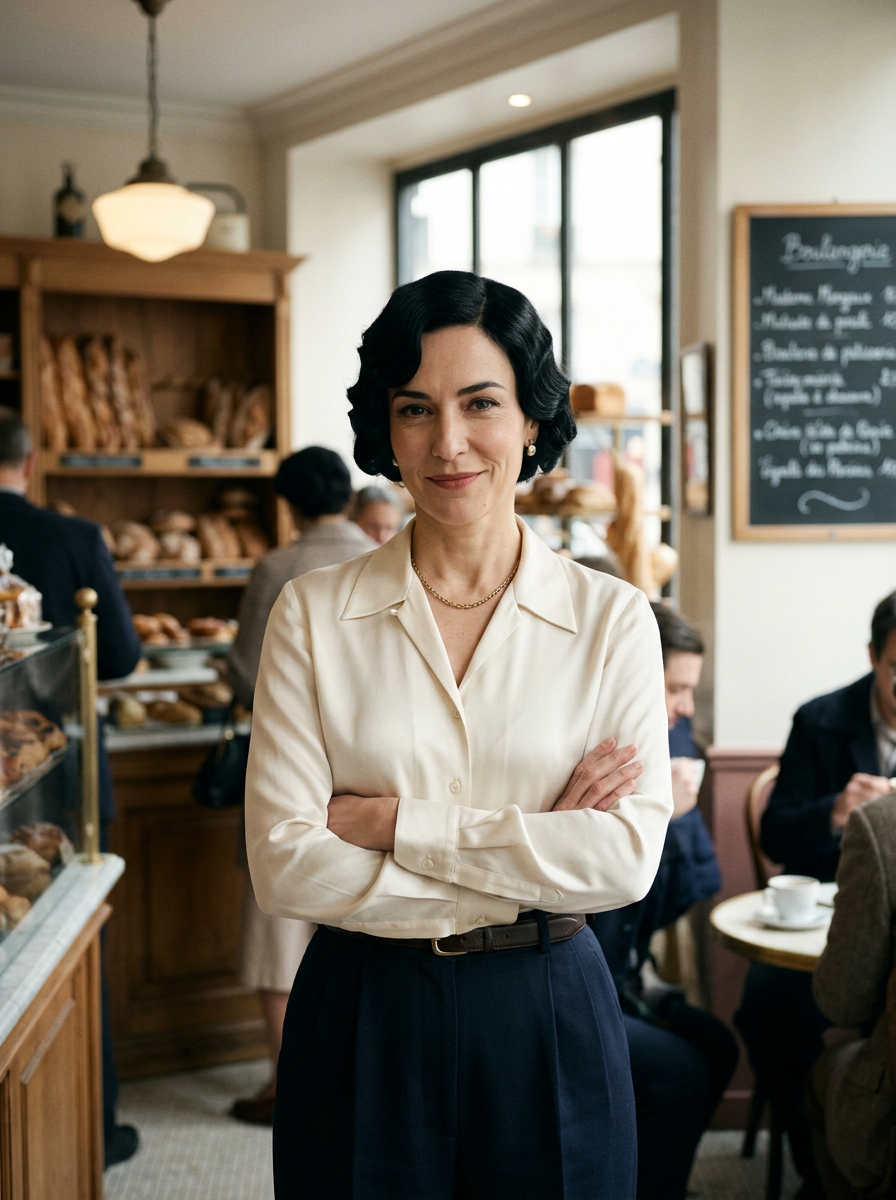
Madame Mademoiselle opened in the Marais in 2023 as the atelier of a former couture pastry chef who refused to choose between sculpture and taste. Trained at Le Meurice and briefly at Cartier's design studio, she conceived each cake as a miniature objet d'art — geometric, lacquered, and displayed under glass like precious stones. The name honours both the woman who arrived and the girl she was, a tension the brand refuses to resolve. There is no café seating. You come, you select, you leave with the black-and-gold box under your arm — the acquisition is the ritual.
“Every cake is a commissioned jewel — precise, decadent, and designed to be desired before it is consumed.”
What we believe
We craft jewel cakes for those who understand that luxury is performed, not consumed.
While Ladurée trades on heritage nostalgia and Pierre Hermé on technical virtuosity, Madame Mademoiselle positions the patisserie as a gallery — you don't go to eat, you go to acquire and to be photographed acquiring. The product is secondary to the performance of taste, and the brand refuses warmth entirely in favor of aspirational exclusivity.
- Decadent without being baroque — richness expressed through restraint and geometry, not ornament and flourish
- French without being quaint — Parisian as a power move, not as nostalgia or provincial charm
- Luxurious without being comfortable — you come here to be seen and to acquire, not to linger or relax
- Feminine without being soft — the 'Madame' and 'Mademoiselle' evoke women as collectors and connoisseurs, not as delicate or sweet
- Trendy without being accessible — this is where the vanguard goes, and exclusivity is part of the appeal, not a barrier to apologize for
Who we're for
She is a 32-year-old gallery director or senior creative at a fashion house who splits her year between Paris, London, and New York. She doesn't eat cake often — when she does, it must be an event, a post worth sharing, a small rebellion of taste that signals she knows where the vanguard is before anyone else does.
28-42, household income €120k+, urban cores of Paris, London, NYC, LA
She values curation over abundance and believes that restraint is the ultimate luxury. She fears being perceived as basic, trend-following, or accessible — her identity is built on knowing what others don't yet, and being seen in the right places at the right moment.
- Photographs the box and the setting before touching the cake — the object is social proof first, consumption second
- Pre-orders seasonal releases announced via Instagram Stories, treating drops like gallery openings or fashion pre-sales
- Never orders multiples or shares — one cake, consumed alone or gifted ceremonially, never casual
- Visits during off-peak hours to avoid crowds — being there is aspirational, queuing is not
- Name-drops the patisserie in conversation the way others mention a museum retrospective or a private dinner
- Expects staff to recognize her on return visits — anonymity would feel like a downgrade
- To be perceived as someone who has access to things others cannot find
- To embody effortless taste — the person who always knows where to go before it's in the guides
- To collect experiences and objects that are visually and culturally defensible, never guilty pleasures
How we sound
The voice is clipped, declarative, and unapologetically luxurious — each sentence lands like a line in a Vogue caption, precise and visually evocative, never chatty or warm. It speaks in present-tense absolutes and sensory imperatives, borrowing the register of haute couture editorials: nouns treated as objects of desire, verbs that command rather than invite, French words deployed untranslated as markers of exclusivity.
Clipped declaratives in editorial present-tense, sensory imperatives that land like Vogue captions, French untranslated as exclusivity markers, unapologetically cold.
“The Opéra arrives under glass — dark ganache, gold leaf, one deliberate bite.”
“Objet. Not dessert.”
“The Madeleine arrives in oxblood velvet, brushed with edible platinum and set on black lacquer. You carry the box like an evening clutch — angular, compact, impossible to ignore. Each bite tastes of burnt honey and cold butter, the kind of precision that requires no explanation.”
“The éclair noir at four. Marble. Brass. Gone by five.”
“Acquire now”
“The Madeleine arrives in oxblood velvet, each one brushed with edible platinum and nested in black tissue.”
- Use present tense, declarative mood
- Deploy untranslated French nouns confidently
- Lead with materials: lacquer, gold, velvet
- Write in sentence fragments when dramatic
- Name the object, not the feeling
- Use second person sparingly, imperatively
- Never use exclamation marks or emojis
- Avoid 'we believe' or brand manifestos
- No warmth cues: 'welcome', 'cozy', 'family'
- Don't explain or justify the price
- Never start with 'In today's…'
- Avoid question headlines entirely
How we look
Hard-edged theatrical spotlight against deep shadow, black lacquer and polished marble, Art Deco geometry with champagne-and-brass accents, stage lighting at dusk.
- Champagne coupe faceted glass catching single spotlight, vertical stem casting geometric shadow
- Black lacquer vitrine surface reflecting brass hardware and cake geometry
- Polished Calacatta marble slab with sharp grey veining, cold to touch
- Gold leaf suspended in mirror-finish glaze, untouched and clinical
- Brass compact case from 1925, patina buffed to cold shine
See the hero above for the palette, type specimens, and moodboard that follow from this philosophy.
Where we sit
- French language on the menu and signage — this brand's Frenchness is non-negotiable and unapologetic
- Small format cakes and portion restraint — the category expectation that luxury patisserie means jewel-sized, not American abundance
- Visible craft and technique signals — Art Deco was obsessed with materials and mastery, so the brand should show piping, glaze, gold leaf as marks of skill
- No rustic / farmhouse / handwritten script bakery aesthetic — this is not a boulangerie with flour-dusted aprons and exposed brick
- No warmth-and-community messaging — reject the 'come as you are / neighbourhood gathering place' trope entirely. This is a place you dress for.
- No natural / organic / wholesome visual language — no kraft paper, no linen, no wheat sprigs. Art Deco was synthetic, lacquered, and unapologetically manufactured luxury.
- The millennial pink / terracotta / sage green palette that every boutique bakery adopted 2018-2022
- Hand-drawn illustration or whimsical line-art — Art Deco was geometric, industrial, and precise, not playful or folksy
- Warm, inviting, 'come in and stay awhile' messaging — this brand is about desire and aspiration, not hospitality
- Serif fonts that read as heritage or traditional bakery (Caslon, Garamond, Baskerville) — those anchor the brand in history, not in the aspirational present
- Organic shapes, soft edges, watercolour textures — all wrong for the hard-edged glamour of Deco and Gatsby
What we offer
Madame Mademoiselle is a Parisian-inspired street bakery specializing in exquisitely small, jewel-like cakes and pastries that merge Art Deco elegance with modern indulgence. Each confection is a miniature masterpiece designed to be savored slowly, photographed obsessively, and enjoyed in the company of those who appreciate the finer things.
“The Gatsby Gateau — a palm-sized, seven-layer champagne cake encased in mirror glaze and crowned with an edible pearl, served in a velvet-lined keepsake box.”
- 01Miniature Opera Cakes with 24k Gold Leaf
- 02Rose Champagne Éclairs
- 03Caviar-Topped Blinis with Crème Fraîche
- 04Pistachio Financiers in Lacquered Boxes
- 05Salted Caramel Religieuses
- 06Black Truffle Macarons
- 07Crystallized Violet Tartelettes
- 08Lemon Verbena Madeleines
- 09Couture Cake Collections (Bespoke Orders)
- 10Seasonal Viennoiserie Flight